Have you ever walked into a room that felt “off,” even though the furniture was beautiful and the layout was perfect? Perhaps it felt sterile like a hospital waiting room, or gloomy like a cave, despite having plenty of windows.
The problem isn’t your decor. It’s your lighting strategy.
Most homeowners treat lighting as an afterthought—a single switch flipped on to banish the dark. But relying on a single light source creates flat, unflattering shadows and causes eye strain. It kills the mood of a room faster than bad paint.
The solution lies in “Layering.” By mastering the four fundamental types of lighting, you can transform a flat, boring room into a dynamic, comfortable, and functional space. In this guide, I will walk you through the exact framework interior designers use to build professional lighting plans.
What are the 4 Types of Lighting?
The four types of lighting are Ambient (general illumination), Task (focused light for specific activities), Accent (highlighting architectural features), and Decorative (fixtures acting as visual centerpieces). A successful lighting plan does not rely on just one; it layers all four to create depth, visual comfort, and functionality.
1. Ambient Lighting
Ambient lighting (also known as general lighting) is the base layer of your room. It is the canvas upon which you paint with light. Its primary goal is to provide a uniform level of brightness that allows you to navigate a room safely and comfortably.
Think of this as the “natural light substitute.” While we focus on electrical fixtures here, don’t forget that managing natural daylight is part of the equation too. Exploring the uses of shade sails can help you control harsh afternoon glare before you even flip a switch.
Common Fixtures:
- Recessed “can” lights (pot lights)
- Flush-mount or semi-flush ceiling fixtures
- Ceiling fans with light kits
- Track lighting (when aimed broadly)
Pro Tip: Avoid the “Swiss Cheese” Effect
Many builders default to putting a grid of recessed lights in the ceiling and calling it a day. This is a mistake. Relying only on overhead downlights creates “cave shadows” under your eyes and nose, making people look tired. Always pair ambient lighting with the other layers below to soften the room.
2. Task Lighting
While ambient light helps you walk across the room, Task Lighting helps you work within it. This is a directed, intense beam of light designed to illuminate a specific area where activities take place—reading, cooking, typing, or applying makeup.
The key to successful task lighting is glare reduction. The source should be positioned so the light hits the surface (the book or the cutting board) without shining directly into your eyes or creating shadows from your own hands.
Common Fixtures:
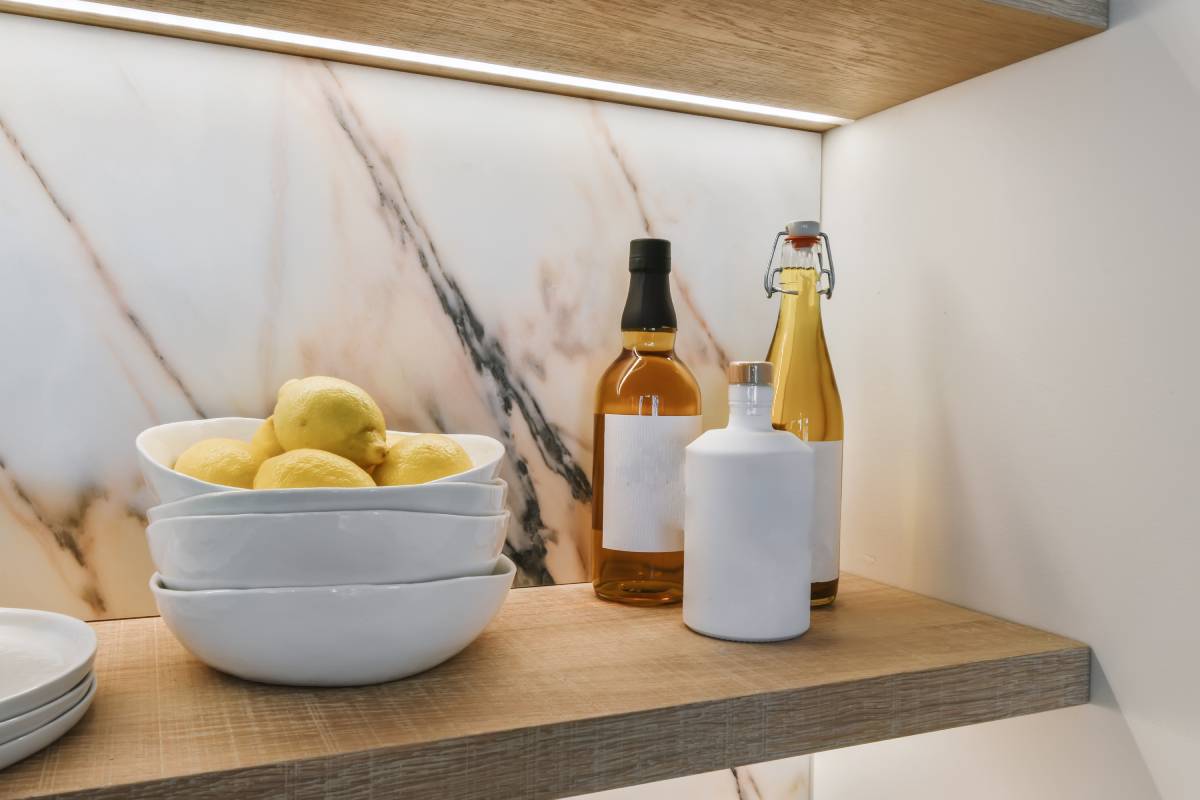
- Kitchen: Under-cabinet LED strips (crucial for seeing countertops).
- Living Room: Swing-arm floor lamps next to reading chairs.
- Bathroom: Vanity sconces placed at eye level (never just above the mirror).
- Office: Adjustable desk lamps.
The Contrast Ratio:
For task lighting to be effective, it needs to be significantly brighter than your ambient light. A 3:1 ratio is standard (the task area should be three times brighter than the general room).
Expert Insight: The Installation Factor
While plug-in lamps are easy DIY additions, the cleanest look comes from hardwired fixtures. If you are planning to install extensive under-cabinet lighting or new wall sconces, you may need to upgrade your switches or circuits. We recommend consulting with an electrical expert like Reds Power Solutions to ensure your new setup is safe, hidden, and code-compliant.
3. Accent Lighting
If ambient light is the canvas and task light is the tool, Accent Lighting is the art. This layer is purely aesthetic. It is used to draw the eye to specific focal points, such as architectural details, artwork, plants, or a textured wall.
Accent lighting adds depth and dimension. Without it, a room looks flat. It creates the “mood” and shadows that make a space feel high-end.
Common Fixtures:
- Directional track heads aimed at a painting.
- Wall-mounted picture lights.
- Recessed adjustable lights (gimbals).
- Landscape lighting. If you are planning to renovate your swimming pool or upgrade your patio, remember that underwater and perimeter accent lighting are just as critical as the water features themselves.
- LED tape light inside glass cabinets or behind floating shelves.
Pro Tip: Light Healthy Trees Only There is no faster way to ruin a view than by highlighting a dead branch. Before installing expensive uplights, understand the difference between Tree Lopping vs. Pruning to ensure your focal points are healthy and worth showing off.
4. Decorative Lighting
This is the category most people forget or confuse with the others. Decorative Lighting is defined not by what it illuminates, but by the fixture itself.
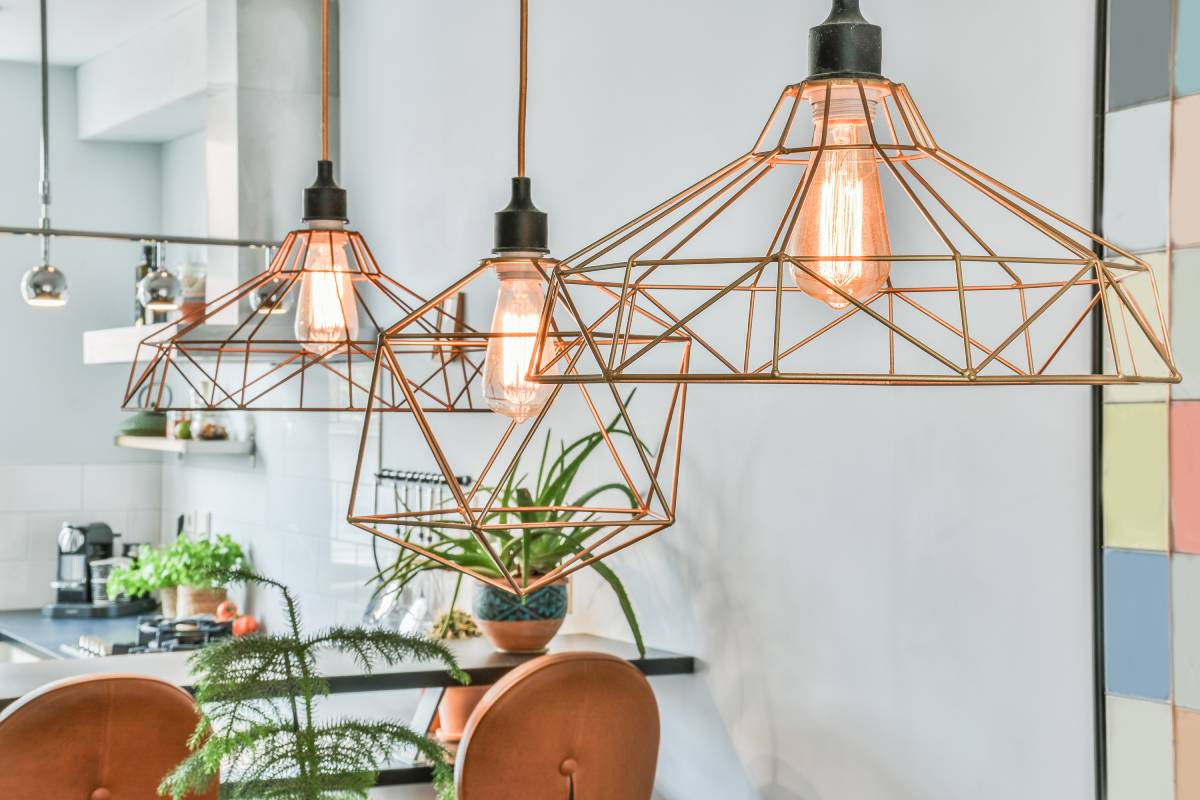
Think of decorative lighting as “architectural jewelry.” While it may provide some ambient glow, its primary function is to look beautiful and reinforce the interior design style (Industrial, Mid-Century, Farmhouse, etc.).
Common Fixtures:
- Crystal chandeliers.
- Ornate wall sconces.
- Sculptural table lamps.
- Neon signage or art lights.
- Pendant lights over a kitchen island.
The Critical Distinction:
A chandelier provides some ambient light, but if you rely on it to light the whole room, it will likely be glaringly bright to look at. Decorative fixtures should be dimmed down to a comfortable glow so they can be admired without hurting your eyes.

How to Layer Like a Designer
Knowing the types is step one. Step two is combining them. Here is the checklist I use when designing a lighting plan for a client:
- Start with Ambient: Ensure the room has general coverage (e.g., recessed lights on a dimmer).
- Add Task Areas: Identify where you sit, read, or chop. Add specific lights there.
- Highlight Features: Pick 1-2 things in the room you love (a fireplace, a plant) and point light at them.
- Add the Sparkle: Choose one decorative fixture that acts as the centerpiece.
The “Secret Sauce”: Color Temperature
You can have the perfect layers, but if you mix color temperatures, the room will look messy. Color temperature is measured in Kelvins (K).
- 2700K (Warm White): Best for living rooms and bedrooms. Cozy and relaxing.
- 3000K (Soft White): Best for kitchens and bathrooms. crisp but not blue.
- 4000K+ (Daylight): Generally too harsh for residential use (avoid for evenings).
Rule of Thumb: Keep all lights in a single open space within +/- 200 Kelvin of each other.
Summary Comparison Table
| Lighting Type | Primary Function | Best Fixtures | Intensity Level |
| Ambient | General visibility | Recessed cans, Flush mounts | Moderate (Base layer) |
| Task | Activity support | Under-cabinet, Desk lamps | High (Focused) |
| Accent | Visual interest/Focus | Track heads, Picture lights | High (Contrast) |
| Decorative | Style & Aesthetics | Chandeliers, Pendants | Low to Moderate |
Conclusion
Great lighting isn’t about buying the most expensive chandelier; it’s about the strategic layering of the four types: Ambient, Task, Accent, and Decorative.
When you combine these layers effectively, you stop simply “lighting a room” and start defining a space. You create an environment that adapts to your needs—bright and functional for cleaning or cooking, yet soft and moody for entertaining or relaxing.
Next Step: Tonight, turn on all the lights in your living room. Look around. Do you have all 4 layers? If you only see ambient ceiling lights, pick one new layer (like a floor lamp for task lighting or an uplight for a plant) and add it. You will be shocked by the difference.